Introduction to Cursors

Welcome to CursorCraft, your comprehensive resource for everything related to computer cursors. From their humble beginnings to their increasingly sophisticated future, we delve into the history, types, customization options, and accessibility considerations surrounding these essential elements of human-computer interaction. In the bustling tech landscape of Silicon Valley, where innovation is the daily bread, understanding the nuances of user interfaces like the cursor is paramount. Whether you're a seasoned developer, a curious designer, or simply an everyday computer user, CursorCraft offers insights that enhance your digital experience.
The cursor, often represented by a simple arrow, is more than just a visual indicator of where your input will be directed. It's a vital communication bridge between you and your computer. It allows you to navigate, select, interact, and ultimately, control the digital world before you. The cursor’s evolution mirrors the evolution of computing itself. The earliest cursors were simple, static symbols. Today they are dynamic, customizable, and increasingly intelligent.
A Brief History of the Cursor
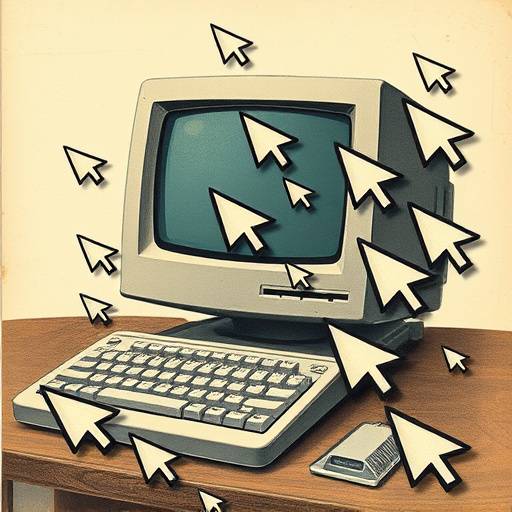
The history of the cursor is intertwined with the history of graphical user interfaces (GUIs). In the early days of computing, interaction was primarily text-based. As GUIs emerged, the need for a visual pointer became apparent. One of the earliest graphical pointing devices was the light pen, used in systems like the TX-2 computer at MIT's Lincoln Laboratory in the 1950s and 60s. This pen allowed users to directly manipulate items on the screen. However, it wasn't until the invention of the mouse by Douglas Engelbart in the 1960s that the cursor truly began to take shape as a ubiquitous element.
Initially, cursors were very basic. The iconic arrow cursor we know today was popularized by the Xerox Alto, one of the first computers with a GUI. This simple design proved to be effective and has remained a staple in computer interfaces ever since. Over time, cursors gained the ability to change shape to indicate different actions or states, like the hourglass or spinning wheel to show that the system is busy. From the rudimentary block cursor of early terminals to the sleek, animated pointers of modern operating systems, the journey of the cursor reflects significant advancements in computing technology and interface design.
"The mouse, along with the GUI, revolutionized how people interact with computers, making them more accessible and intuitive." - Computer History Museum, Mountain View, CA
Exploring Different Cursor Types
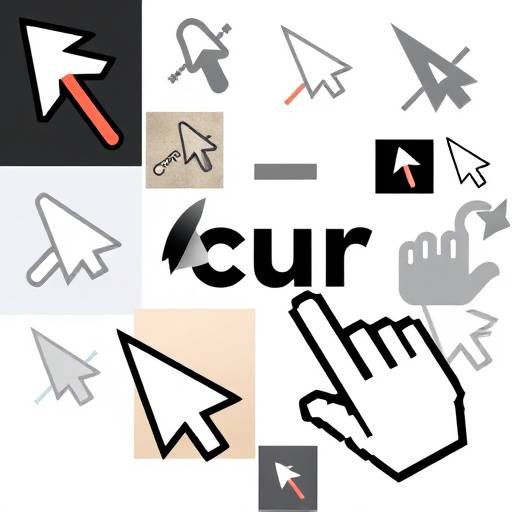
Cursors aren't a one-size-fits-all element. They come in a variety of forms, each designed to convey specific information to the user. Here are some common cursor types you'll encounter daily:
- Arrow Cursor: The standard pointer used for general navigation and selection.
- I-Beam Cursor: Indicates a text input field, allowing users to select and edit text.
- Hand Cursor: Typically used to indicate a clickable link or interactive element.
- Crosshair Cursor: Often used in graphics editing software for precise targeting.
- Busy Indicator (Spinning Wheel, Hourglass): Informs the user that the system is processing and they need to wait.
- Resize Cursors: Indicate that an object can be resized in a particular direction.
Each cursor type serves a crucial role in providing visual feedback and guiding the user through interactions. Understanding these distinctions can greatly enhance user experience and efficiency. Consider the impact on a user if the hand cursor didn't appear on a clickable element – confusion and frustration would likely ensue. CursorCraft aims to empower you with the knowledge to appreciate these subtle yet important design decisions.
| Cursor Type | Description | Typical Use Case |
|---|---|---|
| Arrow | Standard pointer for general navigation. | Selecting icons, clicking buttons. |
| I-Beam | Indicates a text input field. | Selecting and editing text. |
| Hand | Indicates a clickable link or interactive element. | Clicking hyperlinks, interacting with UI elements. |
| Crosshair | Used for precise targeting. | Graphics editing, selecting specific points. |
| Busy Indicator | Informs the user that the system is processing. | Loading data, performing complex calculations. |
| Resize | Indicates an object can be resized. | Adjusting window size, modifying image dimensions. |
The Art of Cursor Customization
Modern operating systems and applications offer a wide range of cursor customization options. Users can often choose from pre-designed cursor sets, adjust cursor size and color, and even create their own custom cursors. This level of customization allows for a more personalized and comfortable computing experience.
For example, individuals with visual impairments might benefit from larger, high-contrast cursors. Designers and developers can create custom cursors that align with their brand identity or application aesthetic. The ability to personalize cursors is a powerful feature that enhances both usability and aesthetics.
CursorCraft encourages users to explore these customization options and discover how they can tailor their cursor to best suit their individual needs and preferences. From subtle color changes to complete cursor overhauls, the possibilities are virtually endless.
Accessibility and Cursor Design
Accessibility is a crucial consideration in cursor design. Ensuring that cursors are easily visible and distinguishable is essential for users with visual impairments or cognitive disabilities. High contrast cursors, larger cursor sizes, and customizable cursor animations can all contribute to a more accessible user experience.
Following WCAG (Web Content Accessibility Guidelines) principles is paramount when designing cursors for web applications. Providing alternatives for users who cannot perceive the standard cursor, such as keyboard navigation or assistive technologies, is also important. CursorCraft is committed to promoting accessible cursor design practices and advocating for inclusive digital experiences.
Consider scenarios where a user has low vision and struggles to locate the cursor on a busy screen. Providing options for high-contrast borders or animations that draw attention to the cursor’s location are crucial for ensuring they can effectively interact with the system. By prioritizing accessibility, we can create a more inclusive digital world for everyone.
Our accessibility expert, Dr. Anya Sharma, based here in Palo Alto, specializes in creating inclusive digital experiences. She often reminds us: "Accessibility isn't just a checkbox; it's a fundamental aspect of good design."
Future Trends in Cursor Technology
The future of cursors is likely to involve increased integration with AI and machine learning. Imagine cursors that adapt to the user's behavior, anticipating their needs and providing intelligent assistance. For instance, a cursor might automatically highlight relevant options based on the user's previous actions or offer contextual suggestions.
Virtual reality (VR) and augmented reality (AR) technologies will also play a significant role in shaping the future of cursors. As we move towards more immersive digital environments, cursors will need to evolve to provide seamless and intuitive interaction within these spaces. Gesture-based control and eye-tracking technologies may eventually replace traditional mouse-based cursors, offering even more natural and intuitive ways to interact with computers.
Companies like NeuroLink are already exploring brain-computer interfaces, which could potentially eliminate the need for physical cursors altogether. While this technology is still in its early stages, it represents a radical shift in how we interact with computers and offers a glimpse into a future where thoughts can directly control digital devices.